

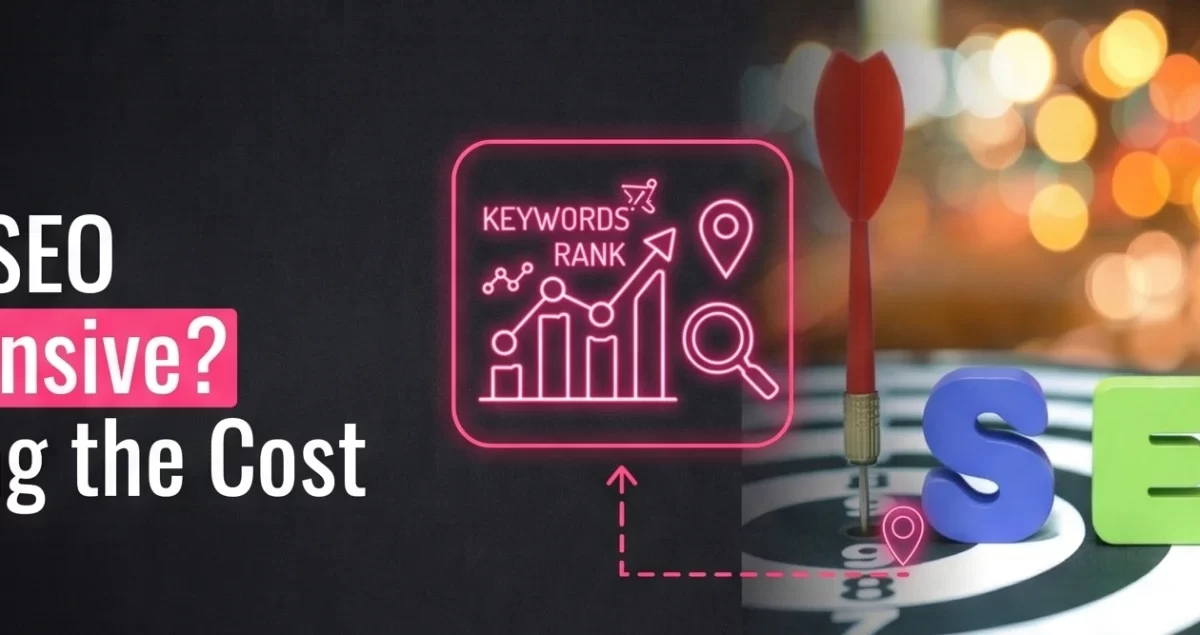
Why is SEO So Expensive? Exploring the Cost
Why Is SEO So Expensive? What You’re Actually Paying For in 2026
An SEO agency sends back a proposal. The number reads $2,000, $5,000, sometimes $10,000 a month. The business owner reading it is usually thinking the same thing: what exactly are they doing for that price?
Here is the quick answer. SEO can be expensive because effective search engine optimization combines strategy, technical work, content creation, competitive research, authority building, analytics, and ongoing testing. You are not simply paying someone to add keywords to a website. The real cost of SEO depends on how competitive your market is, how much work your website needs, how much content must be created, and how much expertise and implementation are included in the SEO campaign.
But expensive does not automatically mean good, and cheap does not automatically mean bad. The real question is what you are getting for the price. That question is what this article actually answers.
Why Is SEO So Expensive?
SEO is not one task. A real SEO campaign includes keyword research, search intent analysis, competitor analysis, technical SEO, on page optimization, content strategy and production, internal linking, link building, local SEO where relevant, conversion optimization, analytics, and reporting. Each of these requires a different kind of expertise, and a serious SEO team rarely has one generalist doing all of it well.
That expertise is also not just about knowing SEO terminology. There is a real difference between someone who can describe what a canonical tag is and someone who knows which pages on a specific website actually need one, and why. SEO professionals who can diagnose a real problem and connect it to a business outcome are harder to find and cost more to hire than someone who can run a checklist.
This is also where a lot of the price difference actually comes from: implementation versus recommendations. Plenty of cheap SEO packages deliver an audit listing forty or fifty things wrong with a website. That document has some value, but on its own it changes nothing. Good SEO work goes further. It prioritizes what actually matters, implements the fix, and measures whether it worked. The gap between “here is what is wrong” and “we fixed it and here is what happened” is a large part of what you are paying for.
Finally, SEO is ongoing because search itself does not sit still. Google’s algorithm updates continuously, competitors publish new content, and user behavior shifts as tools like AI search assistants change how people find information. SEO efforts that stop after month one tend to lose ground within a year.
What Are You Actually Paying for When You Hire an SEO Agency?
It helps to break the cost of SEO services into its real components.
Strategy comes first: understanding business goals, target audience, market, competitors, search demand, and what a conversion actually looks like for that business. Without this, everything after it is guesswork.
Keyword research is not just finding high volume search terms. Good keyword research maps a term to the intent behind it, then to the right page, then to a real conversion opportunity. A keyword with a lot of searches but the wrong intent behind it is often a waste of content budget.
Technical SEO covers crawling, indexing, site architecture, redirects, structured data, Core Web Vitals, mobile experience, and internal linking. None of this is visible to a normal visitor, but it determines whether a search engine can understand and rank a site at all.
Content creation involves topic research, analysis of what already ranks, briefs, writing, expert input, editing, on page optimization, internal linking, and updates over time. Content marketing and SEO work together here: a page written without search intent in mind rarely performs, no matter how well written it is.
Authority and link building, done properly, means outreach, relationship building, and earning links from relevant sites, not buying bulk backlinks that put a site at risk of a penalty.
Reporting and optimization is the part that separates real SEO from a set it and forget it approach. SEO is not publish, wait, rank. It is measure, analyze, adjust, test, and improve, repeated every month.
Why Does SEO Cost So Much Compared With Other Marketing?
Google Ads buys immediate visibility. The moment the budget stops, the visibility stops too. SEO works differently: you invest in building organic visibility that keeps generating traffic after the active work slows down, though it still requires maintenance rather than a one time setup.
Social media marketing can generate reach quickly, but it usually depends on ongoing publishing and, increasingly, paid distribution to keep showing up in feeds. Traditional advertising behaves like paid search: the exposure stops when spending stops.
None of this means SEO works forever without touching it again. It means SEO compounds over time in a way paid channels do not, which is exactly why it is priced as a longer term investment rather than a quick campaign.
Why Are Some SEO Agencies So Much More Expensive Than Others?
Two companies can both sell “SEO” while delivering completely different amounts of work. A senior strategist costs more than a junior account manager running a template. An agency with an in house content and technical team costs more than one outsourcing production to the cheapest available freelancer. Whether link building, technical implementation, and local SEO are actually included, rather than sold as separate add ons, changes the number significantly. Enterprise SEO for a business with dozens of locations, thousands of pages, or a highly competitive market requires far more work than small business SEO for a single location site, which is one of the biggest reasons prices vary so widely across the industry.
Is the SEO Industry Overpriced?
Sometimes, yes. This is a different problem from SEO simply costing money, and the two often get confused.
Someone paying $4,000 a month is not automatically being overcharged. Someone paying $500 a month is not automatically getting a bargain. The right question is not “how much does SEO cost.” It is what work is included, who is actually doing it, and what business outcome that work is designed to influence.
Signs you may be paying for overhead instead of real SEO work include vague monthly deliverables that never get specific, no actual implementation behind the reports, ranking guarantees, unexplained authority fees, and reports built around vanity metrics instead of traffic and leads. Signs a higher fee is justified include an experienced strategist, real technical implementation, original content built around search intent, competitive research, and transparent reporting tied to business outcomes.
| Cheap SEO | Strategic SEO |
| Generic reports | Business specific strategy |
| Automated audits | Human analysis |
| Keyword stuffing | Search intent mapping |
| Bulk backlinks | Relevant authority building |
| Rankings only | Traffic, leads, and revenue |
| Minimal optimization | Continuous iteration |
The cheapest SEO provider is not necessarily saving you money if the work produces no meaningful business outcome.
Why Are SEO Tools So Expensive?
Part of the price tag shows up before a client ever sees a report, in the software cost behind the scenes. Tools like Ahrefs, Semrush, and Screaming Frog maintain enormous, constantly refreshed databases: crawled websites, backlink indexes, keyword databases, ranking history, and SERP data. That infrastructure is expensive to build and maintain, and the cost is passed down through monthly pricing that can run from around thirty dollars into the thousands for enterprise plans.
Does every business need this level of software? No. Google Search Console and Google Analytics provide valuable first party data at no cost, and for a small business, that alone often covers the essentials. Paid tools can help fill specific gaps, like large scale competitor backlink analysis, but they should not replace an actual strategy. Tools do not rank websites. Data without a strategy behind it has limited value. Premium tools tend to be worth paying for on large websites, competitive markets, enterprise SEO, or businesses managing multiple locations and large keyword sets. They are usually unnecessary for a very small website, a single local business, or a business that will not act on the data anyway.
Are the Most Expensive AEO and GEO Tools Worth It in 2026?
Ranking on Google used to be the entire goal. Now, showing up inside AI Overviews, ChatGPT, Perplexity, and similar tools has become its own visibility channel, and a newer category of software tracks it: AI mentions, citations, competitor visibility, and prompt level coverage.
The distinction worth understanding here is monitoring versus optimization. A dashboard can tell you that AI is not mentioning your brand. It cannot fix why. That fix still comes down to the same fundamentals: clear, well structured, genuinely useful content. Premium AI visibility platforms tend to make sense for enterprise brands, agencies, and multi location businesses that are heavily dependent on organic discovery. They are usually unnecessary for a small local business, or for any business that has not fixed its foundational SEO yet. Buying an AEO or GEO tool before the SEO foundation is solid is spending money to measure a problem you have not started fixing.
Is SEO Dead Now That AI Is Changing Search?
No, but SEO is changing. Google still handles the majority of search traffic worldwide, and AI answer engines are themselves built on crawled, indexed content, which means the same SEO fundamentals still feed both systems.
What AI is changing: more direct answers on the results page, fewer traditional click journeys for some queries, AI generated summaries, and a growing emphasis on brand and entity discovery. What AI has not eliminated: crawlability, indexing, useful content, technical SEO, internal linking, authority, and relevance. The model has expanded rather than replaced itself. Search used to mean a ranking that earned a click. Now it means visibility across Google, AI Overviews, AI Mode, and tools like ChatGPT, Gemini, and Perplexity, alongside traditional results, not instead of them.
Is SEO Still Worth It in 2026?
Yes, if organic search visibility can produce meaningful business value for your company. SEO is usually worth investing in when customers actively search for your services, your market has meaningful organic demand, the value of a new customer is high enough to justify waiting for compounding results, and competitors already dominate the organic results you are missing out on.
SEO may not be the first priority when almost nobody searches for the product directly, the business needs immediate demand rather than a compounding channel, or the website itself cannot convert the traffic it already receives. In that last case, fixing the website usually needs to happen before investing heavily in SEO.
How Much Should You Actually Spend on SEO?
The cost of SEO depends on scope, not on the word SEO itself. Local SEO pricing depends on the number of locations, local competition, Google Business Profile optimization, local landing pages, reviews, and citations. Small business SEO usually covers a narrower keyword set and a single market. National and enterprise SEO scale up sharply with more locations, more competitive keywords, and more content required to stay visible. A one time SEO audit is priced differently from an ongoing monthly retainer, since the retainer includes continuous implementation and testing, not just a diagnosis.
There is no single correct number to quote here. The right SEO investment depends on the amount and difficulty of work required to actually compete in your market, which is exactly why two businesses in different industries can pay very different amounts for what looks like the same service on paper.
How to Tell If an SEO Agency Is Worth the Price
A few direct questions separate a fair price from an inflated one. Ask what happens every month, specifically, not in vague language. Ask who actually does the work, and whether it is a senior strategist or a rotating junior team. Ask how results are measured, and push for traffic and leads, not just rankings. Ask what happens if rankings do not improve, and be cautious of any agency that guarantees a ranking outright, since no legitimate SEO agency can guarantee a specific ranking position. Ask to see real examples of past work, not just client logos: technical recommendations, content samples, and before and after reporting.
What a Good SEO Investment Should Actually Deliver
Rankings alone are not the outcome that matters. A good SEO investment should deliver better search visibility across both traditional and AI search, more qualified organic traffic, stronger conversion opportunities from that traffic, and search infrastructure, meaning technical foundations and content assets, that keep producing value well after the active work slows down.
How Blue Monkfish Approaches SEO Investment
Blue Monkfish builds SEO work around research first: keyword research, competitor analysis, and a technical audit before any strategy is proposed. From there, the strategy is built around actual business goals rather than a generic template, with the highest impact work prioritized first. The work is executed, not just reported on, and performance is measured against organic traffic and conversions, not rankings in isolation. As search continues to include AI Overviews and answer engines alongside traditional results, that same foundational SEO work is what supports visibility across both.
SEO Investment Checklist
Before signing an SEO contract, it is worth checking that the proposal includes keyword research, competitor analysis, technical SEO, on page optimization, a real content strategy and production plan, internal linking, an authority or link building plan, local SEO if it applies to the business, conversion tracking, regular reporting, ongoing optimization rather than a one time pass, some consideration of AI search visibility, and a named point of contact who can answer specific questions about the work.
Bringing It Together
Don’t ask whether SEO is expensive. Ask what you are actually buying, and whether that work has a credible path to creating real business value. Real SEO costs what it does because it is strategic, technical, and creative work executed continuously, not a single deliverable. Some of the industry genuinely is overpriced, and knowing the difference between paying for real SEO work and paying for a vague promise is worth the extra questions before signing a contract. For a business with real search demand, SEO remains a long term investment that keeps producing organic traffic long after the active work slows down.
Frequently Asked Questions
Why is SEO so expensive?
SEO combines strategy, technical work, content creation, and ongoing optimization delivered over months. The price reflects specialized SEO expertise and tools working together, not a single quick task.
Why does SEO cost so much compared to other marketing?
Unlike paid ads, which stop producing visibility the moment spending stops, SEO builds organic visibility that compounds over time, which requires sustained investment in strategy, content, and technical work rather than a short campaign.
Why are SEO tools like Ahrefs and Semrush so expensive?
These platforms maintain massive, constantly updated databases of crawled websites, backlinks, and keyword data. That infrastructure is costly to maintain, and the cost is passed through subscription pricing.
Are expensive AEO and GEO tools worth it?
For enterprise brands where AI driven answers already influence buying decisions, often yes. For a small business still building its SEO foundation, a free diagnostic is usually enough to start.
Is SEO dead now with AI?
No. Google still drives most search traffic, and AI answer engines rely on indexed, crawled content, so the same SEO fundamentals still matter for both.
Is SEO still worth it in 2026?
Yes, when real search demand exists and the value of a new customer justifies a longer timeline. It remains one of the few channels that compounds over time instead of stopping when spending stops.
Sources and References
- Google Search Central. “AI Features and Your Website.” developers.google.com/search/docs/appearance/ai-features
- Google Search Central. “Google’s Guide to Optimizing for Generative AI Features on Google Search.” developers.google.com/search/docs/fundamentals/ai-optimization-guide
- Google Search Central. “Creating Helpful, Reliable, People First Content.” developers.google.com/search/docs/fundamentals/creating-helpful-content
- Google Search Central. “Google Search’s Guidance on Third Party SEO Tools and Advice.” developers.google.cn/search/docs/fundamentals/third-party-seo
- WebFX. “Why Is SEO So Expensive? 7 Reasons for SEO Cost.” webfx.com/blog/seo/why-is-seo-so-expensive
- WebFX. “Is SEO Dead in 2026? No, But the AI Landscape Has Changed It.” webfx.com/blog/seo/is-seo-dead

