

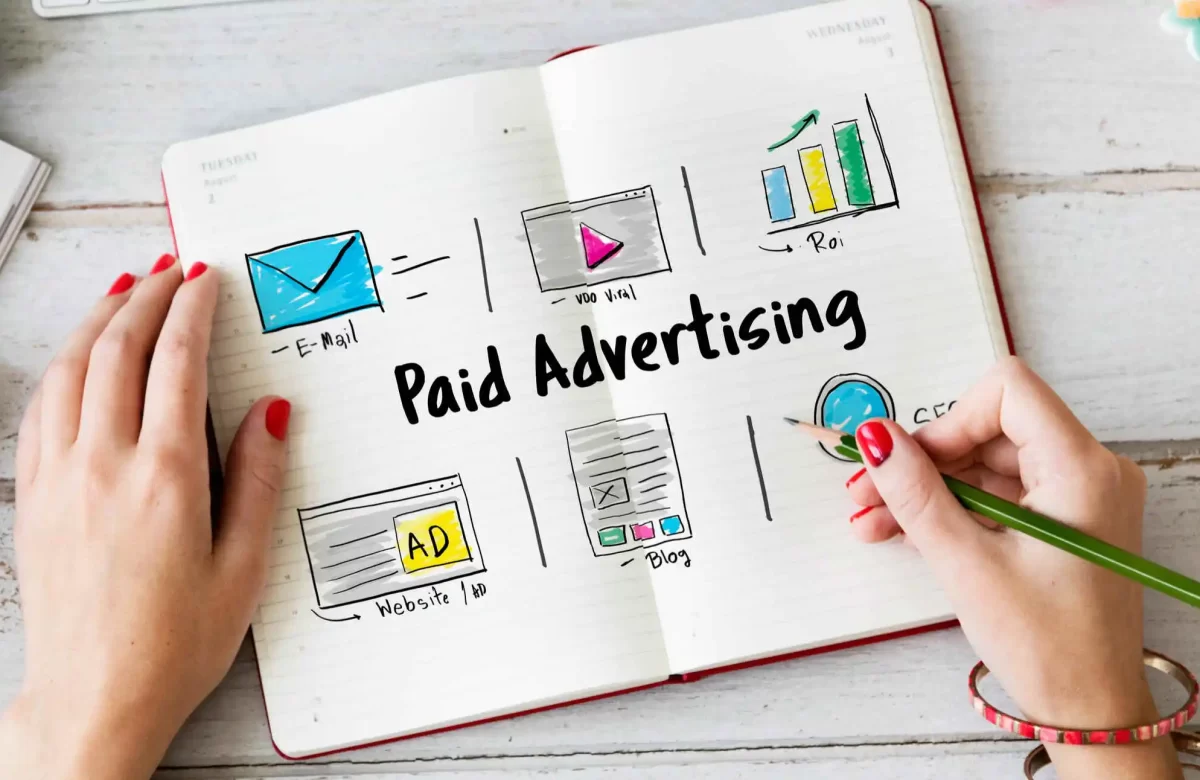
Are Google Ads Worth It in 2026? Costs, ROI, and Small Business Guide
Are Google Ads Worth It in 2026? Honest Answer for Small Businesses
Every small business owner asks this at some point. You hear that Google Ads can flood your pipeline with leads. Then you hear from a friend who burned through $1,000 and got nothing back.
Both stories are true. And the difference between them has nothing to do with luck.
At Blue Monkfish, we are a full-service digital marketing agency based in Hoboken, NJ. We have built and managed Google Ads campaigns for small businesses across New Jersey in industries ranging from restaurants and legal services to home improvement and healthcare. This guide gives you our straight, experience-backed answer — no fluff, no pitch, just the full picture.
Quick Verdict
Are Google Ads worth it in 2026?
Yes — but only when the right conditions are in place.
Google Ads work exceptionally well for businesses with clear search demand, a realistic budget for their market, a landing page built to convert, and someone actively managing the campaign. Remove any one of those four elements and the results fall apart fast.
The platform is not broken. The setup usually is.
According to Google’s own economic impact data, businesses make an average of $2 in revenue for every $1 spent on Google Ads. That number sounds promising — and it is achievable — but it assumes a well-built, actively managed campaign, not a set-and-forget approach.
Source: Google Economic Impact Report
How Google Ads Work?
Google Ads runs on a pay-per-click (PPC) model. You only pay when someone clicks your ad — not when it appears in search results.
Here is the basic flow. You choose keywords your customers search for, write ad copy, set a daily budget, and place a bid on each keyword. Every time someone searches on Google, an automated auction runs in milliseconds. The winner gets the top ad placement.
But the auction does not go to the highest bidder. It goes to the highest Ad Rank — which is your bid multiplied by your Quality Score.
Quality Score measures three things: how relevant your ad is to the search term, the expected click-through rate, and the quality of your landing page experience. A small business with a highly relevant, well-optimized ad can outrank a large advertiser with a bigger budget but a weaker campaign.
Source: Google Ads Help — About Quality Score
The main campaign types for small businesses in 2026:
- Search Ads — Text ads that appear at the top of Google search results
- Display Ads — Visual banner ads across Google’s network of websites
- Shopping Ads — Product listings with images and prices for eCommerce
- Performance Max — Google’s AI-powered campaign type that runs across Search, Display, YouTube, Gmail, and Maps from a single campaign setup
Performance Max became the default shopping campaign format in 2023 and continues to expand in 2026 with stronger AI optimization signals across all Google surfaces.
Source: Google Ads Help — About Performance Max campaigns
When Google Ads Are Worth It?
1. Strong Search Demand Exists for Your Business
Google Ads captures intent. When someone searches “emergency plumber Hoboken NJ” or “immigration lawyer near me,” they are not browsing — they are ready to act.
If your customers actively search for your product or service before buying, Google Search Ads put you in front of them at the exact moment the decision is forming. That timing advantage is something no other advertising platform replicates as effectively.
2. You Have a Dedicated Landing Page
Sending paid traffic to your homepage is one of the fastest ways to waste a Google Ads budget.
A dedicated landing page built around one specific offer, one audience, and one call to action consistently converts at a higher rate than a general homepage. According to Unbounce, businesses using dedicated landing pages see conversion rates between 2 and 5 percent on average, compared to under 1 percent for homepage traffic from paid ads.
3. Your Budget Matches Your Market
Every industry has a baseline cost per click. Going in underfunded does not save money — it guarantees failure.
A $200 monthly budget in a $15 CPC market gets you roughly 13 clicks. That is not a campaign. That is a test with no statistical significance and no realistic path to a return on investment.
Your budget needs to be appropriate for the keyword competition in your specific niche and location.
4. Conversion Tracking Is Properly Configured
Before you spend a single dollar, GA4 and Google Tag Manager need to be correctly set up and firing on the right conversion events.
Without accurate conversion tracking you cannot identify which keywords are generating leads, which ads are driving calls, and which landing pages are underperforming. You are flying blind and optimizing based on impressions and clicks alone — neither of which pays your bills.
5. Someone Is Actively Managing the Campaign
Google Ads is not a set-and-forget platform. Campaigns left unattended slowly bleed budget on irrelevant searches, poorly performing ad groups, and keywords that were never going to convert.
Weekly negative keyword reviews, bid adjustments, ad copy testing, and search term analysis are what separate campaigns that improve over time from campaigns that quietly drain your account.
When Google Ads Are Not Worth It?
This is the section most agencies skip because it might cost them a sale. We include it because our job is to help you make the right decision — not just the one that benefits us.
1. Your Budget Is Too Small for Your Market
$100 to $200 a month sounds like a reasonable test. In most competitive markets, it is not enough to draw any conclusions.
At an average CPC of $10 to $20 in service industries, $200 gets you 10 to 20 clicks for the entire month. Google’s own guidance suggests campaigns need a minimum of 30 to 50 conversions per month for Smart Bidding to optimize effectively. You cannot get there on a shoestring budget in a competitive niche.
Source: Google Ads Help — Smart Bidding
2. Nobody Is Searching for What You Sell
Google Ads captures existing demand — it does not create it.
If your product is new to market, highly niche, or something customers do not yet know to search for, search ads will show minimal impressions and generate little traffic. In these cases, Facebook Ads, Instagram, or YouTube advertising are better starting points because they push your message to audiences rather than waiting for searches that may never come.
3. Your Website Cannot Convert Visitors
Paid traffic amplifies what your website already does. If your site is slow, unclear, or fails to build trust, Google Ads will amplify those weaknesses — and bill you for the privilege.
According to Google, 53 percent of mobile site visits are abandoned if a page takes longer than 3 seconds to load.
Source: Google/SOASTA Research via Think with Google
Fix the website before investing in paid ads. There is no shortcut around this.
4. You Need Overnight Results With Zero Testing Time
Google’s algorithm needs data before it can optimize. The learning phase for most campaign types takes 2 to 4 weeks, and meaningful performance data typically takes 60 to 90 days to accumulate.
If your business needs cash flow immediately and cannot absorb a testing period, Google Ads is not the right short-term solution. SEO takes longer but builds compounding returns. A referral program or local outreach may be a faster path to revenue in the near term.
5. Your Business Is Purely Referral-Driven
Some industries — high-end B2B consulting, boutique legal practices, specialist financial services — close almost entirely through relationships and word of mouth.
Forcing a paid search strategy onto a referral-based business model often produces poor conversion rates regardless of campaign quality. If your clients come to you through trusted introductions, your marketing budget is often better spent on thought leadership content, LinkedIn presence, or networking rather than Google Ads.

How Much Google Ads Cost?
Direct answer for voice search and featured snippet:
Google Ads cost between $1 and $100 per click depending on your industry, keywords, and location. Most small businesses spend between $300 and $2,000 per month on ad spend. Management fees from a professional agency typically add $400 to $1,500 per month on top of that.
Cost benchmarks by business type in 2026:
| Business Type | Recommended Monthly Budget | Average CPC |
| Local restaurant or bar | $300 to $600 | $1 to $3 |
| Home services | $500 to $1,500 | $5 to $15 |
| Legal services | $2,000 to $5,000 | $20 to $50 |
| eCommerce retail | $500 to $2,000 | $0.50 to $3 |
| Digital marketing agency | $800 to $2,500 | $8 to $25 |
| Healthcare and dental | $1,000 to $3,000 | $10 to $30 |
Is $100 enough for Google Ads?
For most competitive markets, no. At an average CPC of $5 to $15, $100 gives you 7 to 20 clicks for the entire month. That is not sufficient volume to generate consistent leads or make any meaningful optimization decisions. A realistic starting point for most small businesses is $300 to $500 per month in ad spend.
What Affects Google Ads ROI?
Quality Score
Google scores every keyword from 1 to 10 based on ad relevance, expected click-through rate, and landing page experience. A higher Quality Score earns a lower cost per click and a better ad position.
Improving Quality Score is often the fastest way to improve ROI without touching the budget at all.
Landing Page Conversion Rate
Your landing page is where the money is actually made or lost. A page converting at 5 percent versus 2 percent generates 2.5 times more leads from identical ad spend.
Most businesses over-invest in ad budget and under-invest in the landing page. It should be the other way around.
Keyword Match Types
Broad match keywords show your ads for loosely related searches that often have no buying intent. Phrase match and exact match keep your spend focused on searches that actually convert.
Starting on broad match is one of the most common and expensive mistakes new Google Ads advertisers make.
Negative Keywords
Irrelevant clicks are pure waste. Adding negative keywords weekly removes searches that will never convert and reallocates that budget toward searches that will.
According to WordStream, properly managed negative keyword lists can reduce wasted spend by 20 to 40 percent over a 90-day period.
Source: WordStream — Negative Keywords Guide
Industry Competition
High competition industries drive up cost per click. Understanding your market’s average CPC before entering sets accurate ROI expectations and prevents underbudgeting from the start.
Best Google Ads Practices
- Set up conversion tracking before day one GA4 and GTM must be correctly configured before any spend begins. Every dollar spent before tracking is live is money you cannot learn from.
- Build a dedicated landing page per ad group One keyword group, one message, one landing page. This alignment drives Quality Score up and cost per click down simultaneously.
- Start with exact and phrase match keywords only Broad match burns budget on irrelevant searches. Expand match types only after you have conversion data that guides the decision.
- Add negative keywords every week Review your search terms report weekly without exception. This single habit reduces wasted spend by 20 to 40 percent over 90 days.
- Schedule ads for your best converting hours Use ad scheduling to run campaigns only when your customers are most likely to convert. A local restaurant does not need to run Google Ads at 3 AM.
- Test two ad copy variations per ad group Run two responsive search ads simultaneously and let performance data decide the winner. Pause the underperformer and write a new challenger.
- Give campaigns 60 to 90 days before major structural changes The algorithm needs data to optimize. Early major changes reset the learning phase and discard the conversion signals already collected.
Google Ads vs Other Platforms
| Platform | Best For | Intent Level | Avg Cost |
| Google Search Ads | Capturing active demand | Very High | $1 to $50 CPC |
| Google Display Ads | Awareness and retargeting | Low to Medium | $0.50 to $2 CPC |
| Google Shopping Ads | eCommerce product sales | High | $0.50 to $3 CPC |
| Facebook and Instagram | Audience building | Low to Medium | $0.50 to $3 CPC |
| YouTube Ads | Video brand awareness | Low | $0.01 to $0.03 per view |
| SEO | Long-term organic traffic | High | Free per click |
Google Search Ads win for capturing people who are actively ready to buy. Facebook and Instagram win for building brand awareness with audiences who were not looking. SEO builds compounding organic traffic that does not stop when your budget does.
The strongest results come from running Google Ads for immediate leads while SEO builds in the background. Both channels reinforce each other — a brand that ranks organically and appears in paid results simultaneously earns significantly higher click-through rates than either channel alone.
Source: Google and Ipsos — The Value of Search
Why Blue Monkfish for Google Ads Management?
Blue Monkfish is a full-service digital marketing agency based in Hoboken, NJ. We build and manage Google Ads campaigns for small and mid-size businesses across New Jersey and beyond.
We do not just launch campaigns and disappear. Every account gets weekly performance reviews, monthly transparent reporting, and ongoing optimization — so you always know exactly where your budget is going and what it is producing.
What our Google Ads management includes:
- Full campaign setup including keyword research, ad copy, and bidding strategy
- GA4 and GTM conversion tracking configuration before launch
- Dedicated landing page recommendations or builds for each campaign
- Weekly negative keyword management and search term analysis
- Monthly reporting with plain-English explanations — no vanity metrics
- Combined Google Ads and SEO strategy so clients build both immediate paid visibility and long-term organic rankings simultaneously
We manage campaigns across restaurants, legal services, home improvement, healthcare, eCommerce, and professional services. Businesses of all sizes get the same level of attention and transparency.
If you want a free audit of your current Google Ads setup or want to build a campaign the right way from day one, contact the Blue Monkfish team today.
FAQs
Is $100 enough for Google Ads?
No. At $5 to $15 CPC in most service industries, $100 gives you 7 to 20 clicks per month. That is not enough volume for consistent leads or meaningful optimization. A realistic minimum for most small businesses is $300 to $500 per month in ad spend.
Is Google Ads worth it for small business?
Yes, when budget matches the market, a proper landing page is in place, and conversion tracking is correctly configured. Small businesses benefit most from local targeting which limits spend to only the geographic area they serve — making every dollar more efficient.
Are Google Ads worth it in 2026?
Yes. Google Ads remains one of the highest ROI paid advertising channels available in 2026. AI-driven Performance Max campaigns have added automation but the core success factors have not changed — right keywords, right budget, right landing page, and active management.
Is Google Ads free to use?
Creating a Google Ads account is free. You pay only per click — there is no monthly subscription fee for the platform. Most small businesses invest $300 to $2,000 per month in ad spend plus optional professional management fees.
Are Facebook Ads worth it compared to Google Ads?
Different tools for different goals. Google captures people actively searching for your product right now. Facebook reaches people who match your audience but were not looking. Best results come from running both with separate objectives — Google for demand capture, Facebook for demand creation.
How does Google Ads work and how much does it cost?
Google Ads charges per click. You bid on keywords, Google runs a real-time auction combining your bid and Quality Score, and you pay only when someone clicks. Costs range from $1 per click for low-competition local terms to $100 per click in highly competitive industries like legal or insurance.
Sources referenced in this article:
- Google Economic Impact Report — economicimpact.google.com
- Google Ads Help Center — support.google.com/google-ads
- Think with Google — thinkwithgoogle.com
- WordStream Google Ads Industry Benchmarks — wordstream.com
- Unbounce Conversion Benchmark Report — unbounce.com

